
Rwanda vs Uganda Gorilla Trekking Prices
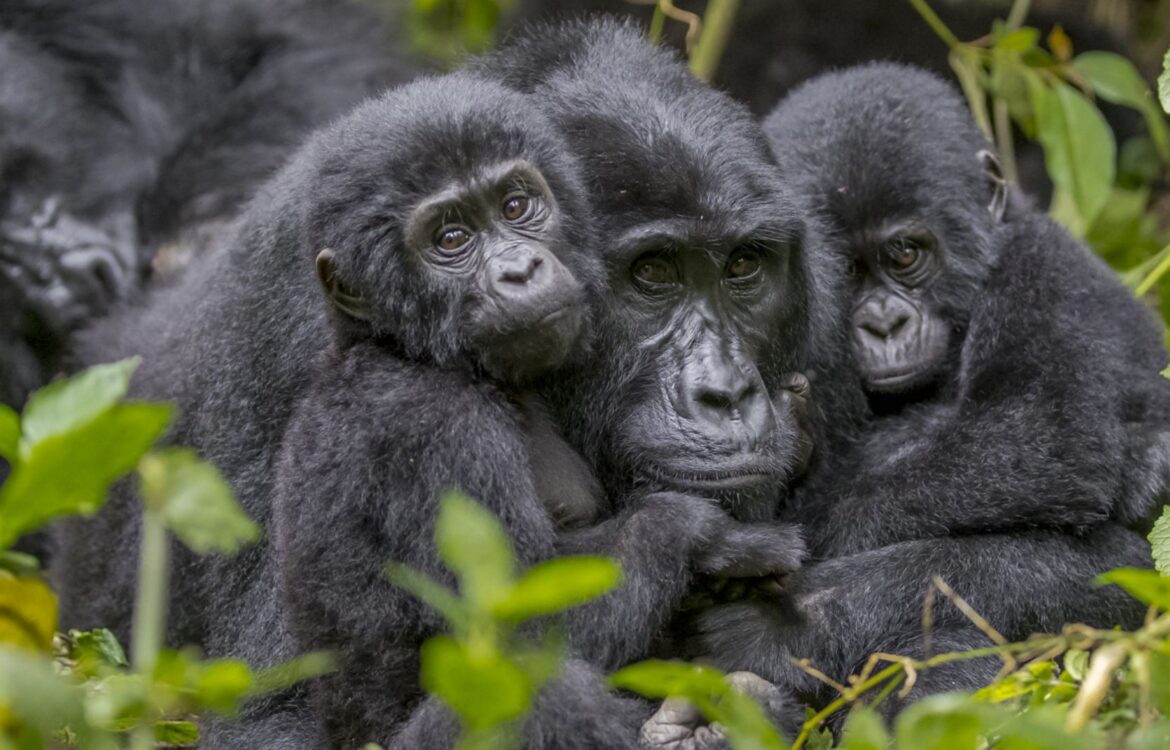
Gorilla trekking is one of the most unique nature experiences you can have. It offers the chance to get up close and personal with gorillas in their natural habitat after hiking through a dense forest with an expert tracker—an opportunity to simply observe and share the same space with these magnificent creatures.
As you plan to embark on a gorilla trekking safari, there are several factors to consider, such as where to go, how to get there, and how much it will cost. Let us guide you as you develop your plan to experience this enchanting wildlife adventure.
What is Gorilla Trekking?
Gorilla trekking is a wildlife experience in which a group hikes through a dense forest in search of a family of wild mountain gorillas. Once the gorilla family is located, you can observe them for about an hour from a distance of 10 meters to ensure the gorillas’ health and safety. This activity is permit-restricted, meaning you need a permit to participate. If you have a transmissible illness, such as a cold or the flu, you are expected to forfeit your trek to protect the gorillas’ health. Participants must be at least 15 years old to engage in gorilla trekking.
There are two types of gorilla trekking experiences: gorilla trekking and gorilla habituation. Gorilla trekking involves a group of eight people who can observe a gorilla family for one hour. Gorilla habituation allows a smaller group of four people to observe the gorilla family for four hours. Uganda is the only country that offers gorilla habituation.
Where can you go Gorilla Trekking?
Mountain gorillas can only be found in three countries: Uganda, DR Congo and Rwanda.
In Uganda, there are two parks: Bwindi Impenetrable National Park and Mgahinga Gorilla National Park. These parks are home to over 22 habituated gorilla family groups, with 21 in Bwindi and one in Mgahinga.
| Gorilla Trekking Permit | Foreign Non-Residents | $800 |
| Foreign Residents | $700 | |
| African Citizens (Non-East African) | $500 | |
| East African Citizens | UGX 300,000 | |
| Gorilla Habituation Permit | Foreign Non-Residents | $1500 |
| Foreign Residents | $1000 | |
| African Citizens (Non-East African) | $1000 | |
| East African Citizens | UGX 750,000 |
The Virunga National Park in DR Congo has offered gorilla treks, while the Kahuzi-Biega National Park has provided lowland gorilla encounters. However, due to ongoing militia conflicts in the country, tourism has been largely suspended and remains unstable. As of 2026, independent visits and tour operators are strongly discouraged from organizing trips to these parks.
Rwanda’s Volcanoes National Park is home to approximately 12 habituated gorilla families. Although Rwanda has the highest gorilla trekking permit prices, the government offers a discounted rate of $1,050 for travelers who spend at least two nights visiting another Rwandan national park.
| Experience | Visitor Category | Prices (per person) |
| Gorilla Trekking Permit | Foreign Non-Residents | $1500 |
| Foreign Residents | $500 | |
| Rwandan Nationals and East African Citizens | $200 |
Transportation
Bwindi Impenetrable National Park is approximately an 8 to 10-hour drive from Kampala, the capital city of Uganda. Alternatively, you can travel from Kigali, which is a 4 to 5-hour drive across the border to Bwindi. Another option is to take a domestic flight from Entebbe International Airport to Kihihi Airstrip, followed by a one-and-a-half-hour drive to Bwindi. While taking a domestic flight saves time, it increases the overall cost of your trip.
Volcanoes National Park is located 2 to 3 hours outside the capital city of Kigali, making it an excellent destination for travelers with limited time.
Accommodation
You can choose from budget, mid-range, and luxury accommodations in Uganda. This variety caters to travelers of every price range, making it more affordable for those on a limited budget. It also allows for a longer itinerary, as you can go chimpanzee tracking in Kibale or engage in cultural experiences with the Batwa communities.
Rwanda places a greater emphasis on luxury accommodations and, as a result, offers fewer budget and mid-range options. If you prioritize comfort over full immersion in nature or have limited time and don’t mind the higher cost, Rwanda is an ideal choice. Because of the limited activities and the small size of Akagera—Rwanda’s only savannah national park—travelers often combine visits to Volcanoes National Park with safaris in Uganda, Kenya, and Tanzania.
Hidden Costs
There are costs you may not anticipate until you encounter them during your trip, but it helps to be aware of them and factor them into your budget

- Sedan (piggyback) chairs: These chairs are designed for visitors with limited mobility and are available in Uganda. The sedan chair stretchers are carried by a group of 8 to 10 porters. The cost ranges from US$300 to US$500 per trek. If you require this service, it is advisable to arrange it in advance, as securing one at the last minute is often impossible.
- Porters carry your backpack and help you maintain balance on slippery sections of the trek. Hiring a porter costs between US$10 and US$15 per day. Tipping is customary, typically between US$5 and US$10. By hiring a porter, you are directly supporting local youth or former poachers and promoting community involvement in conservation efforts.
There are a few important factors to consider when planning your trip, such as the best time to go trekking. During the high season, which runs from June to October and December to February, it is recommended to book your permit about four months in advance due to high demand and the limited number of permits issued. However, during the low season, from March to May, you can book a permit just one month in advance.
Planning a successful gorilla trekking trip can result in a memorable and deeply gratifying experience. To make that happen, you need to choose a tour operator who will take the time to understand your needs. Speak to us, and we can create a gorilla trekking experience that you’ll be raving about to everyone.


