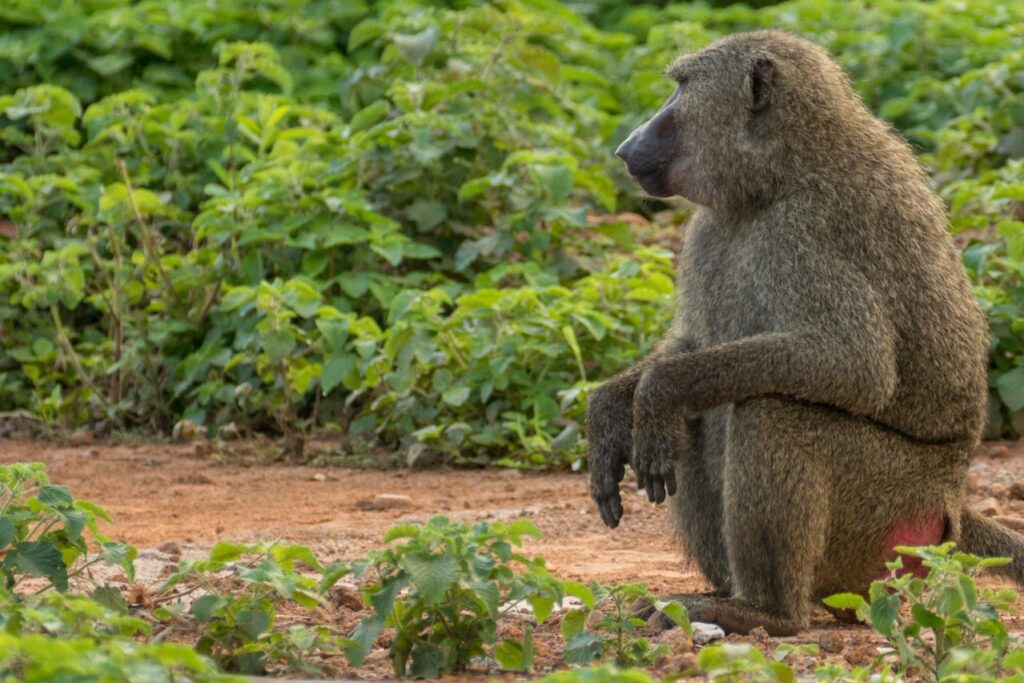
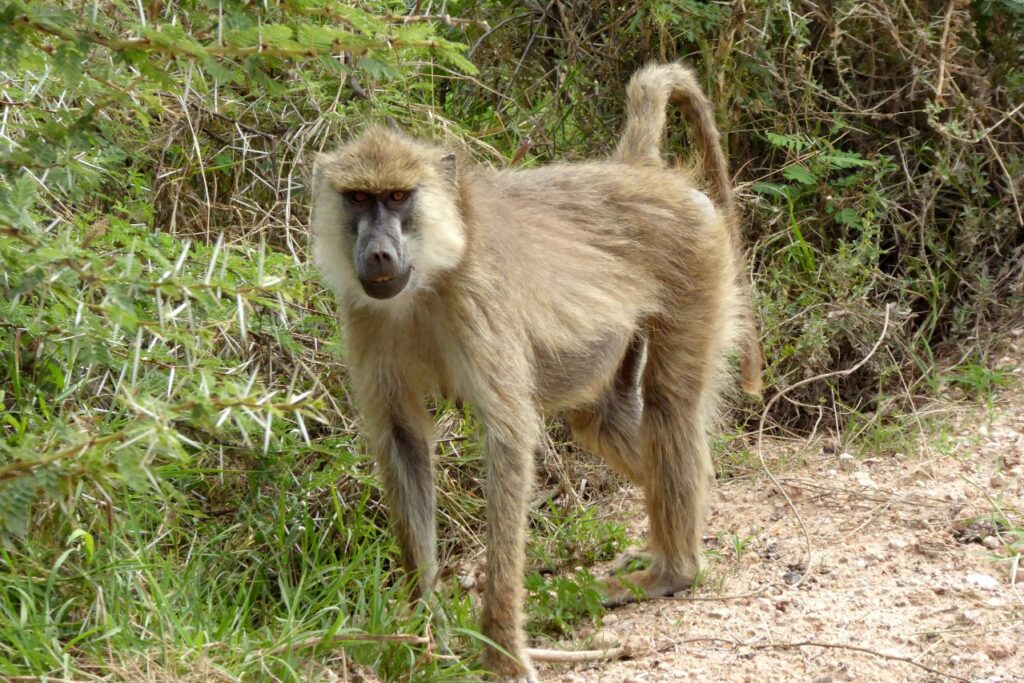
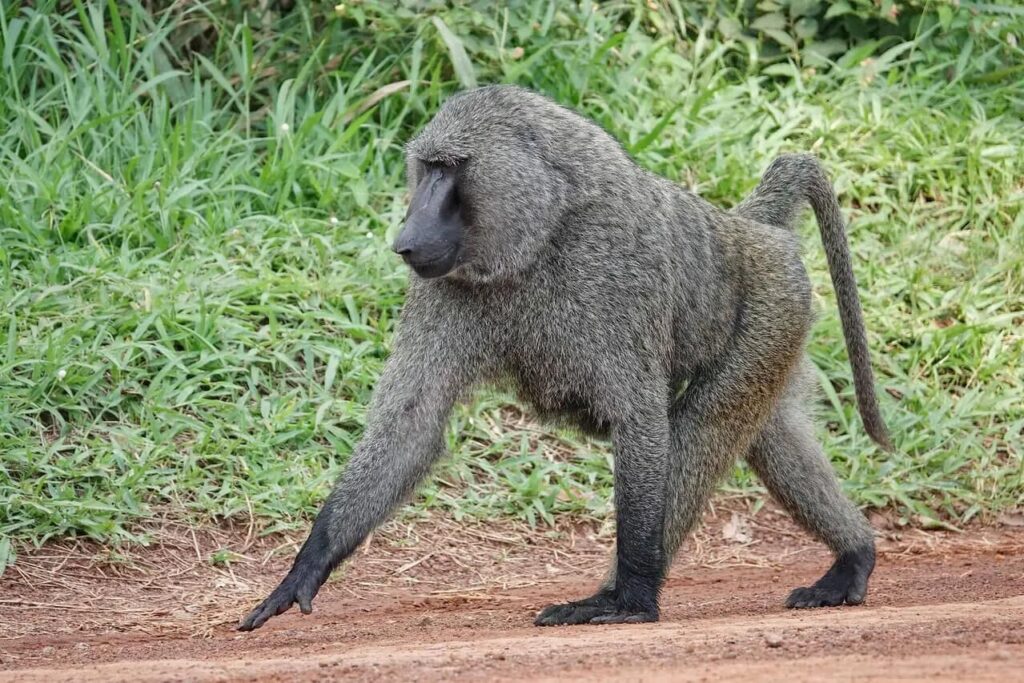
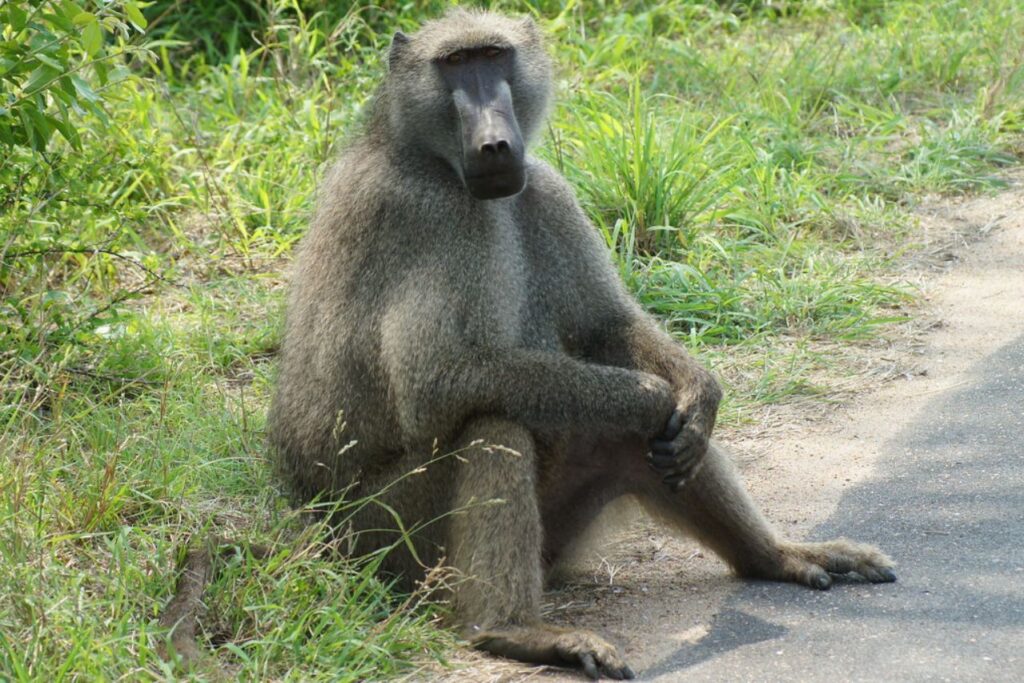
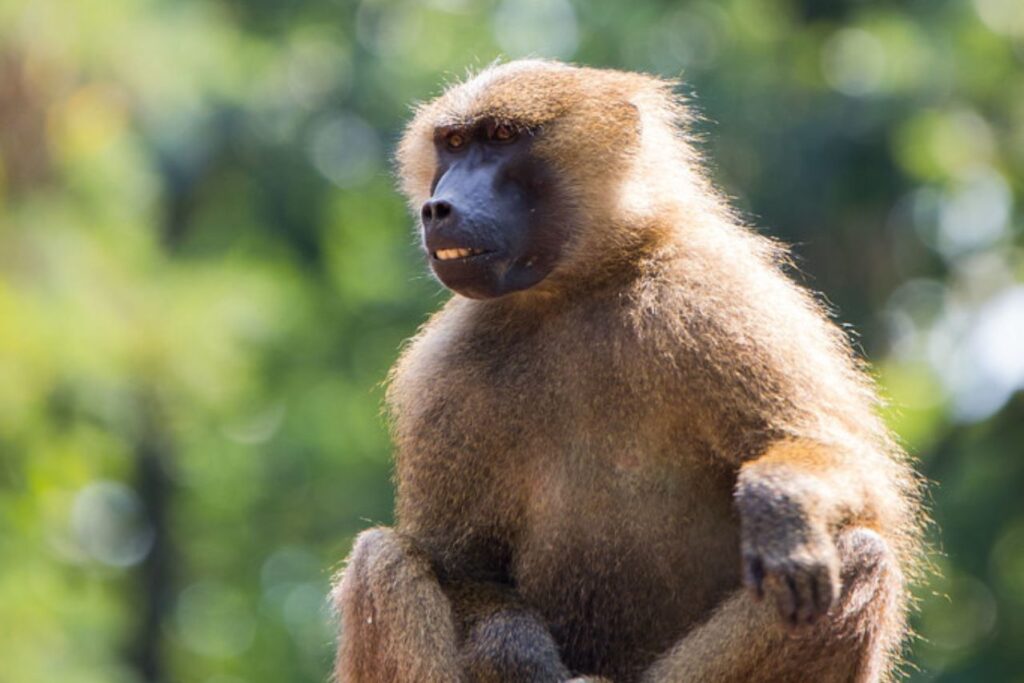
Baboons inhabit a wide range of environments across Africa and the Arabian Peninsula. You can find them in grasslands, savannas, and open woodlands, as well as in rocky hills and forests. They are highly adaptable, making use of their diverse habitats to forage for food and evade predators. Baboons often sleep in trees or on high cliffs, which provide safety from nocturnal predators.
They live in large, complex social groups called troops and exhibit intricate social behaviors. Troops can range from 50 to over 300 individuals, with a strict dominance hierarchy. Males typically compete for dominance, while females inherit their rank from their mothers. This social structure affects access to resources, mating opportunities, and grooming partners.
Baboons communicate using more than 30 vocalizations, facial expressions, and body postures. Grooming is an essential social activity that strengthens bonds and helps maintain hygiene. In times of need, members of the troop form alliances to challenge and defend higher-ranking individuals.
Baboons are omnivores and enjoy a varied diet. Baboons consume fruits, seeds, leaves, and grasses as their primary food sources. They also eat insects, small mammals, and birds. Their opportunistic feeding habits enable them to exploit a wide range of food sources, which contributes to their adaptability in different environments. They often raid human crops and garbage, which leads to conflicts with people living near their habitats.
Baboons exhibit remarkable intelligence and problem-solving skills. They use tools in the wild, such as sticks to extract insects or rocks to crack open nuts. Their cognitive abilities extend to social interactions, where they display deception, tactical thinking, and memory.
Some of the baboons top predators are leopards and cheetahs. However, human beings pose the biggest threats to them by hunting for their meat and skins, capturing them for use in lab experiments, and intentionally poisoning them, as people see them as pests due to their raiding of farms.
Baboons face habitat loss due to agricultural expansion, human-wildlife conflict, and hunting for bushmeat, which pose a risk to their survival. Species like the Guinea baboon face near-threatened status. Conservationists focus their efforts on habitat protection, community engagement, and research to ensure these species’ long-term survival.