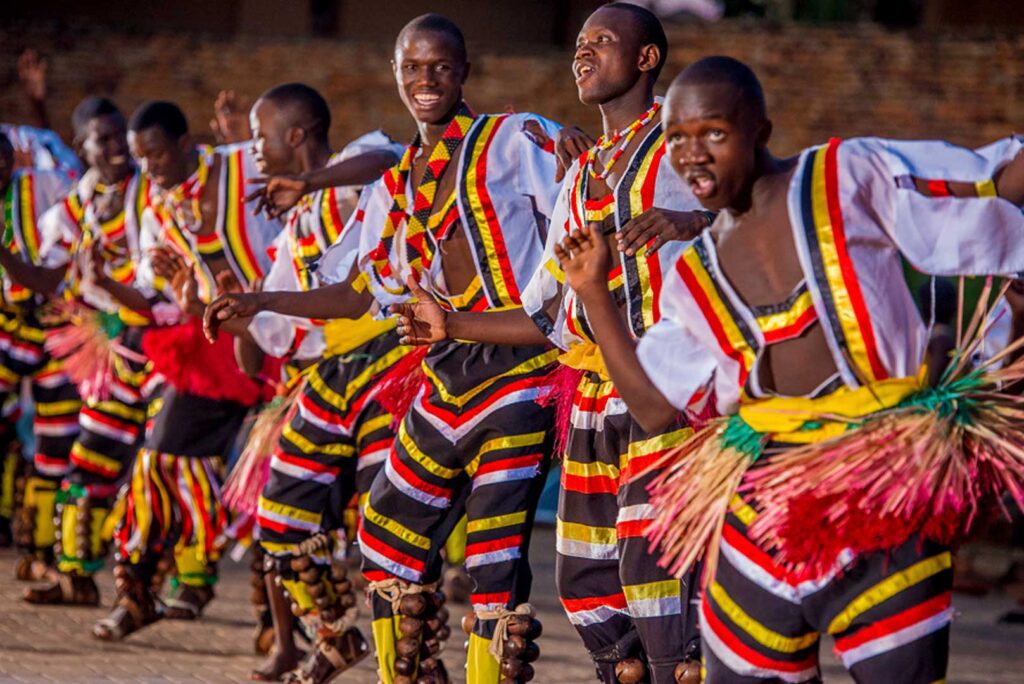
Uganda is home to a number of diverse cultures whose norms and customs bleed into every aspect of the culture.
One of the best ways to experience these cultures is through their various distinct traditional dances.
The dances and the songs that go with them symbolize different important events that happen in the community.
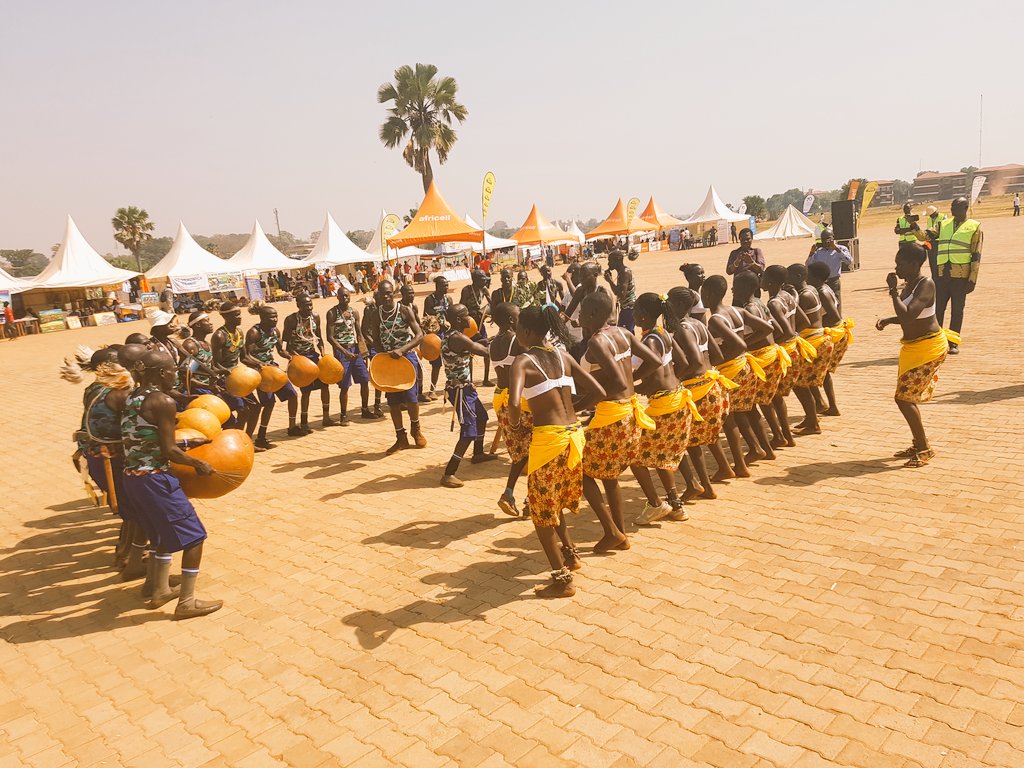
This dance comes from the Acholi community and is the oldest, most cheerful, and most common dance in this community. It is a courtship dance that was danced during the dry season.
In pre-colonial Acholi, this dance was a way for the young men to show off their dancing skills in order to impress the young women, a way for them to make their initial advances. Originally, this dance was done in the nude to make it more erotic but also to reveal any bodily deformities, which is not the case today.
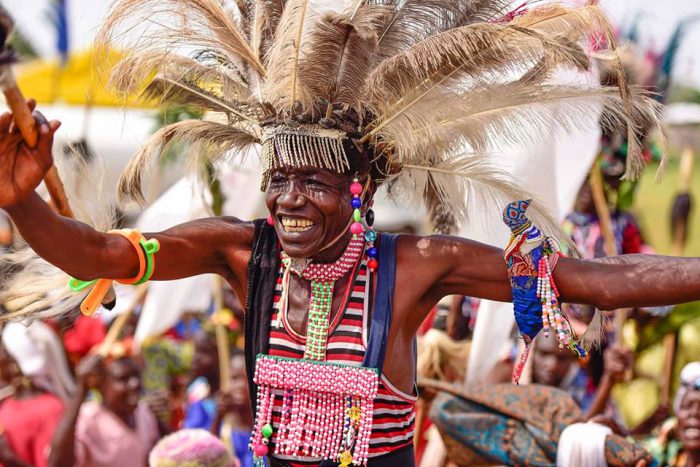
In this dance, the men wear rooster feathers on their heads and carry calabashes that they shake and hit rhythmically with small saches. During the dance, the women shake their hips and waists excitedly to show off their femininity.
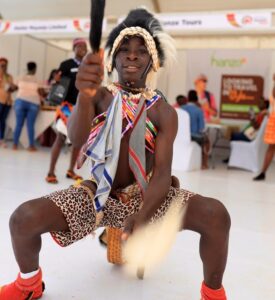
The war dance. This dance was done by men between 30 and 50 years old. It was done to prepare young men on what to expect from the rigors of war and was typically performed during raids and attacks on other villages.
The men wear rooster feathers on their heads and carry shields and spears, with which they perform mock representations of what happens in war: combat formations, retreats, and victory dances, among others. This dance was symbolic of the major role Acholi men played in protecting their families and territories from intruders.
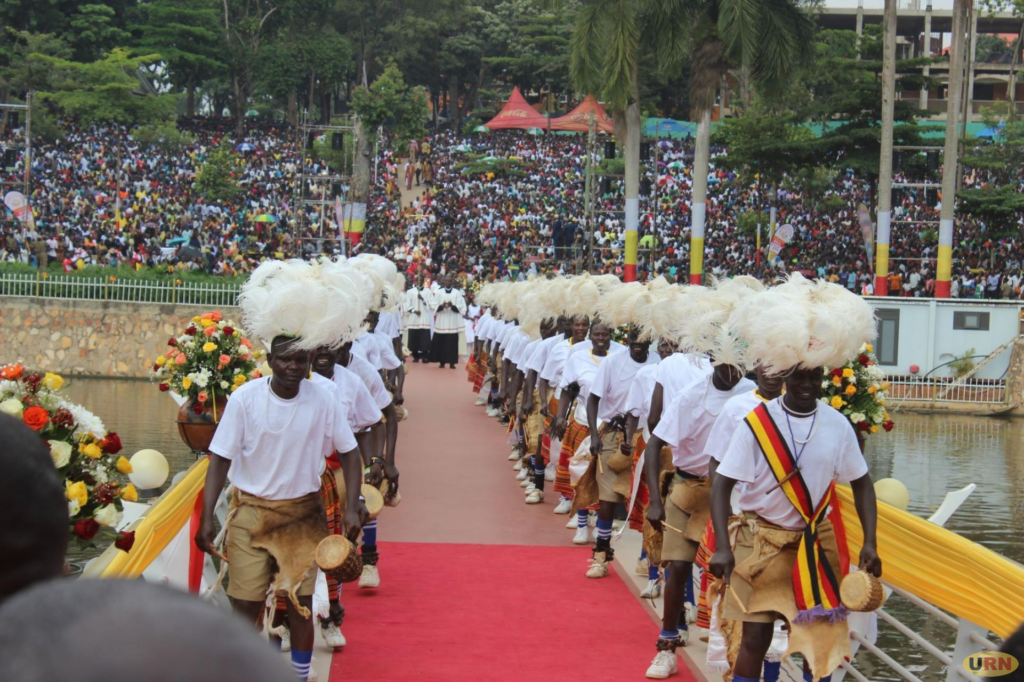
Also known as the royal dance, it is performed to honor chiefs and other dignitaries. According to claims locally, this dance was done by the chief to bring rain. It is a highly choreographed dance with constantly switching formations by men and women both in single lines, with the men’s line enclosing the women’s line on both sides that eventually forms into a circle. The circle symbolizes the tight fence of the kingdom within which all are protected, defended, and thrive.
Named after the main instrument used during the dance agwaras, the local trumpets. The men play the agwaras and drums, while men and women alike dance. They move their feet from side to side while moving in a single line alongside each other, eventually culminating in everyone dancing in a semicircle around the musicians.
The sound of the agwaras is similar to the sound of flies. The dance imitates the movements of hunters as they are stalking their prey and are trying not to scare them off.
This dance is highly energetic and is typically performed by young people due to its physical strain. It is a children’s dance that celebrates their everyday lives and the fact that they are still young and flexible.
Otwenge literally means “elbow” in Alur. In this dance, young women move their waists and legs rhythmically from side to side, utilizing movements that highlight the elbow, as one woman sings and the men play drums and the adungu (local harp), the star instrument of the performance. The song is played on the adungu, and it highlights the importance of the elbow.
This is the courtship dance of the Iteso, and it shares several similarities with the Larakarakara dance for the Acholi and Runyege for the Batooro. The music for this dance is played on the akogo (thumb piano), the endere (flute), and drums that come together to form a soft but melodic sound. The song sung during the dance is one inviting everyone in the community to participate in the dance and act as witnesses to the courtship of two lovers. This is also a chance for the other participants to find a marriage partner. The dancers move in a circle, jumping slightly and moving from side to side on the beat.
Ekitaguriro is a dance to celebrate the harvest, but it is also done to celebrate the Banyakore’s love for cows. The movements in this case resemble the long-horned indigenous cattle of the Ankole. The singing that accompanies the dance is reminiscent of the sounds cows make. The dance starts off with heroic recitations, then the men move effortlessly from one leg to the other, stamping on the ground, imitating the way cows walk, and the women raise their hands above their heads and spread them, imitating the long horns of the cattle.
There are two tribes under the Banyakole: the Bahima (pastrolists and nobility) and the Bairu (peasants and agriculturists). This dance is performed by Bahima.
This high-energy dance is symbolic of the jumping and stamping the Bakiga people used to do to warm up before they went out to cultivate their farms. This dance also symbolizes the way the Bakiga used to traditionally stamp on the ground until they found signs of water. Ekizino was also done after a successful harvest as a way to show their happiness. Both the men and women jump and stamp on the ground energetically while raising their hands up and down to match their legs. This dance is carried by the sounds of embuutu (the big drum), ensassi (shakers), endere (the flute), hand clapping, and a singling that is led by a lead singer.
There is a belief among the Baganda people that this dance was created as a result of a Buganda king (Kabaka) getting very happy on the local brew (tonto, omwenge) and dancing out of happiness. He was then joined by his subjects around him. It is considered a celebratory dance. It has three movements: Nankasa, Baakisiimba, and Muwogola.
The royal dance is typically performed for the king and was originally only performed in the palace by the members of the Obutiko (Mushroom) clan. The story goes that Kabaka Mulondo had died without an heir but had left many of his wives pregnant, and when the medicine men found out one of the wives, Namulondo, was expecting a boy, she sat on the throne in the place of her unborn son. This dance was created by the boy’s uncles and aunts to sooth and keep the son of Kabaka Mulondo happy as he sat on the throne, as the king did not cry or it would bring bad luck to the kingdom. The men put ankle bells on their legs, and the sound they made as the men danced amused the young prince.
This is a ceremonial initiation dance performed by the Bagisu when preparing a boy for circumcision, which they believe initiates a boy into manhood. The dance is symbolic of the circumcision ceremony. The boy dances for 21 days, and it is believed that he will possess the spiritual powers to have no fear and go through the ceremony and become a man. Bells are attached to the participant, and they are escorted by the whole community as they dance, ululate, play fiddles, and play flutes as they sing traditional songs. The procession makes its way around before getting to the final place of circumcision, where the boy is supposed to be brave and not show any sign of weakness during the ceremony.
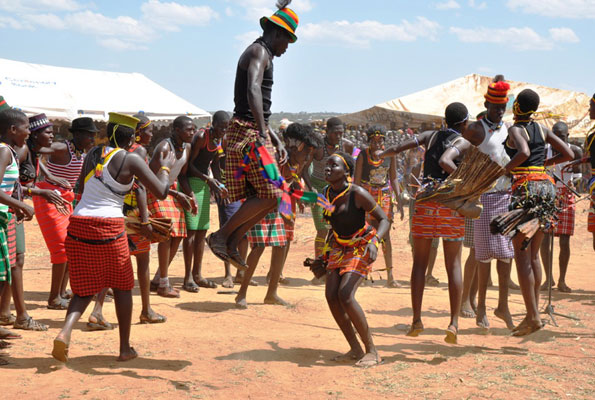
The Karimojong and Maasai people of Kenya are famous for their traditional dance, where they jump as high as possible. This elegant dance signifies their love for their culture.
Uganda is a country of diverse people and cultures that each have their own unique ways that are reflected in the way they dance, what they eat, what they think is important, how they dress, and the different rituals they have for every facet of life. This is what makes the country such a beautiful, colorful, and interesting place because there is always an opportunity for you to learn something from your neighbor.

Unauthorized copying or use of content from this website is prohibited and may result in legal action.
WhatsApp us