Uganda is a country blessed by nature, but it is also a country with a rich history and diverse cultures. There are various sites around the country that will be sure to capture your attention and fascination.
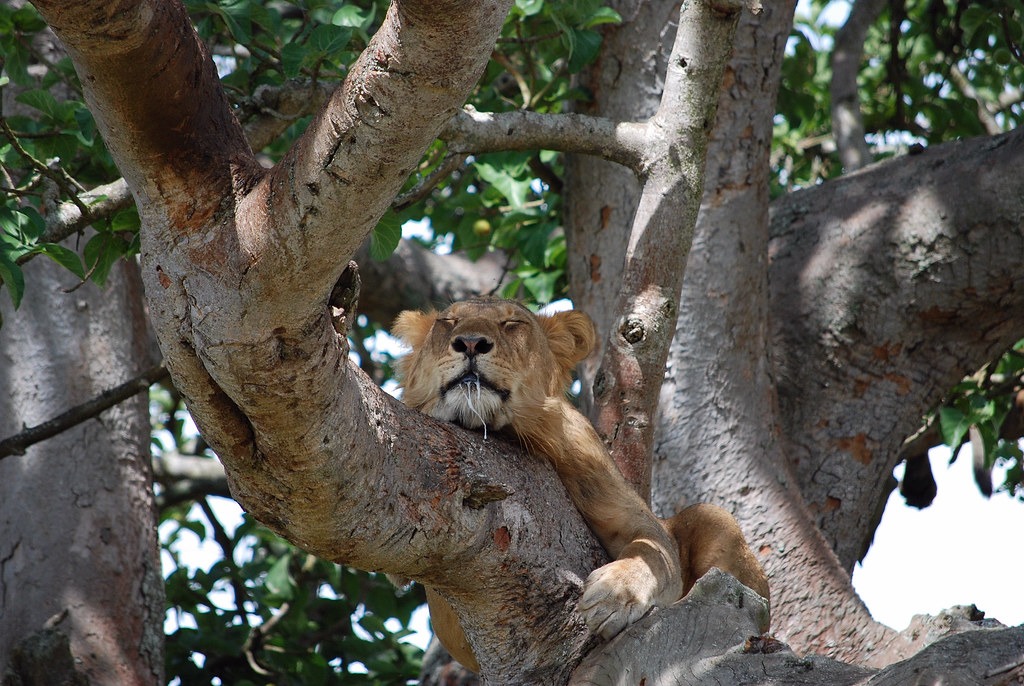
The words tree climbing and lion do not usually go in the same sentence, but the tree climbing lions in Queen Elizabeth National Park do not know that. There are only two populations of tree-climbing lions in the world; one is found in the Ishasha Sector in the southern sector of Queen Elizabeth National Park. The other is found in Lake Manyara National Park, which is in the southern part of Tanzania.
The reasons for these lions exhibiting this unusual behavior are unknown, but it is speculated that they do it to protect themselves from tsetse flies that bite them while they are on the ground. However, it is also claimed that they climb trees to escape the heat and catch a cool breeze.
Whatever the reason for their tree-climbing tendencies, these lions are a key attraction and a tour highlight in Queen Elizabeth National Park.
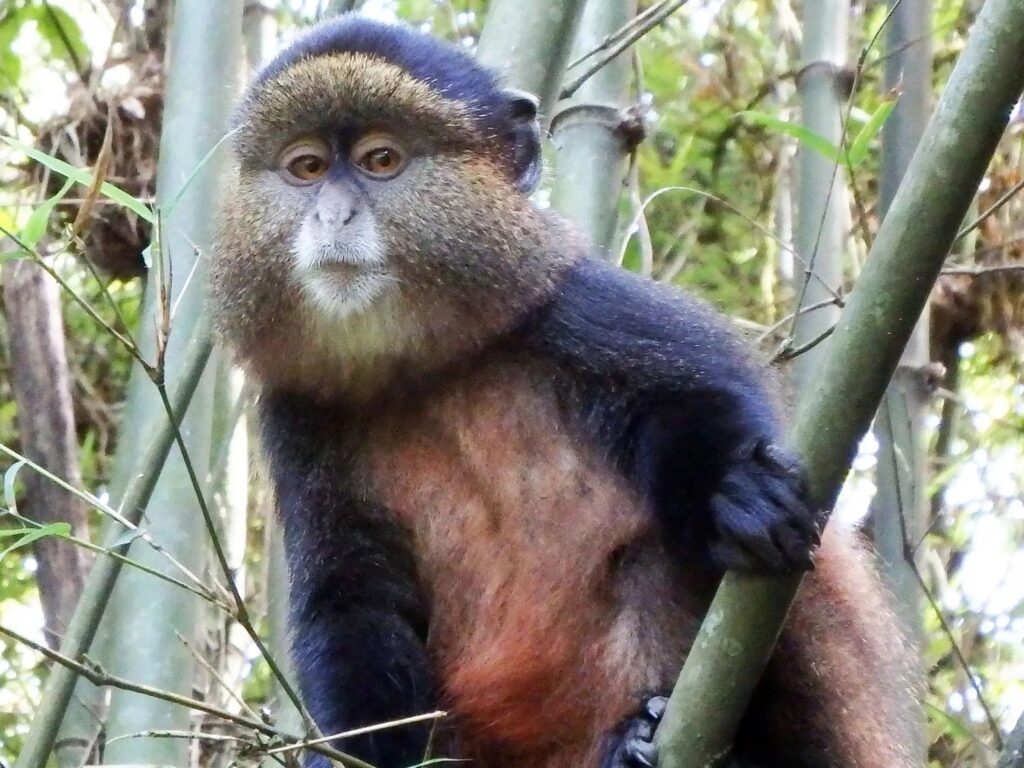
Known by their honeyed golden fur, this elusive primate is one of the 20 primate species present in Uganda. Due to their mysterious nature, not much is known about these animals, as they are hard to observe due to their elusive nature. It has been observed that they live in groups of 30 individuals and eat mainly bamboo, leaves, fruits, and occasionally insects.
In Uganda, they can only be found in Mgahinga National Park, which is part of the Virunga Mountains, which is where these monkeys are endemic. They are one of the park’s main attractions, alongside the famous Mountain Gorillas.
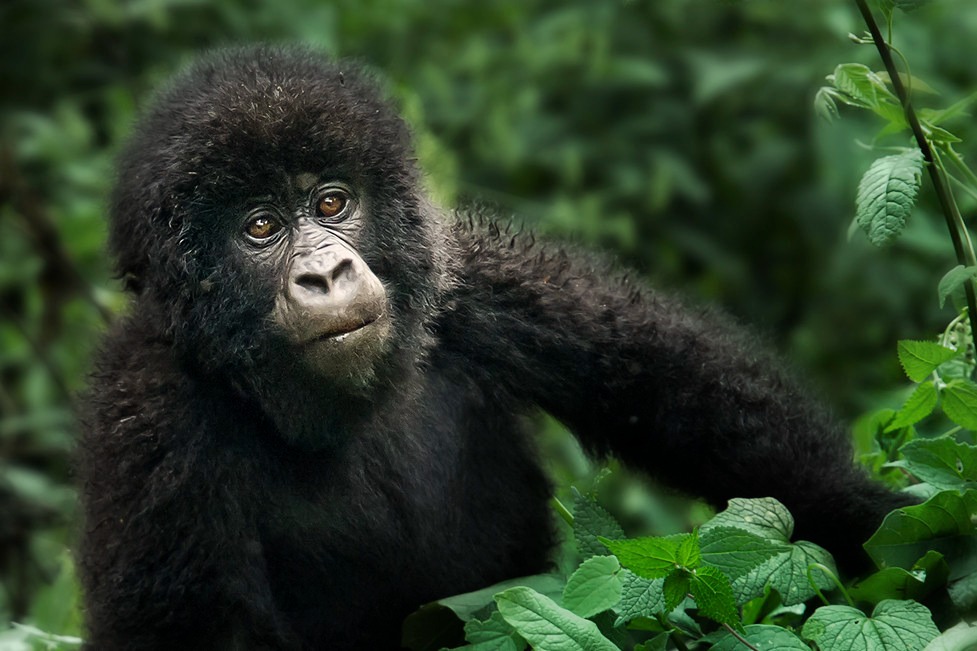
The mountain
gorilla is the second-largest primate in the world and can only be found in Eastern
Africa, in an area around DR Congo, Uganda, and Rwanda. They can be found in
Bwindi Impenetrable Forest and on the slopes of Virunga Mountain. They live in
troops that can have up to 50 individuals, all led by a dominant male called a
silverback.
Visiting mountain
gorillas in their natural habitat is a once-in-a-lifetime experience that
allows individuals to witness these magnificent animals up close while also
supporting their conservation efforts. It is a reminder of the importance of
preserving our planet’s biodiversity and protecting endangered species for
generations to come.
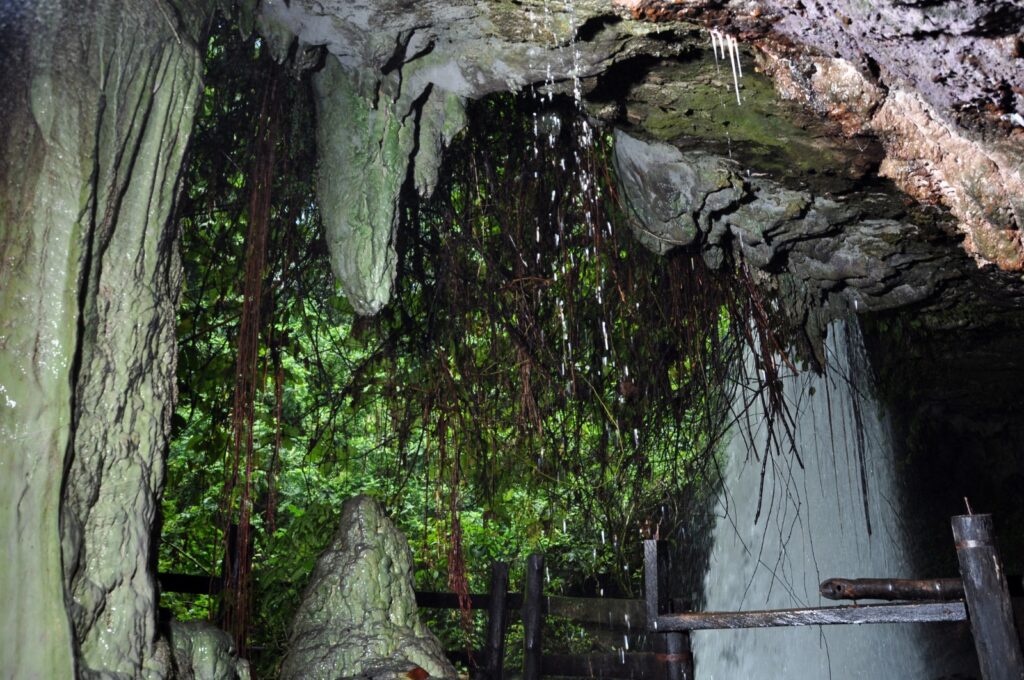
Amabeere ga Nyina Mwiru translates to “breasts of Nyinamwiru.” These caves are located about 7 km from Fort Portal town in Kabarole, near Nyakasura School.
There is an ancient myth among the Batooro attached to these rocks; it is said that an ancient king of the Batembuzi Dynasty called Bukuku had a daughter called Nyinamwiru (after whom the rocks are named) who was a great beauty.
Nyinamwiru refused to marry the man that her father had chosen for her, as was the custom, and so as punishment, her father cut off her breasts so she could be unattractive and would never nurse a child and put her under house arrest in the place compound. The stalactite rock formations in the caves are believed to be Nyinamwiru’s breasts dripping milk since that day.
After exploring the caves, you can also hike up the hills of Nyakasura to see the views of three different beautiful crater lakes. You can also visit the site with a large footprint believed to belong to one of the Batembuzi, who were believed to be a giant, demi-god race of people.
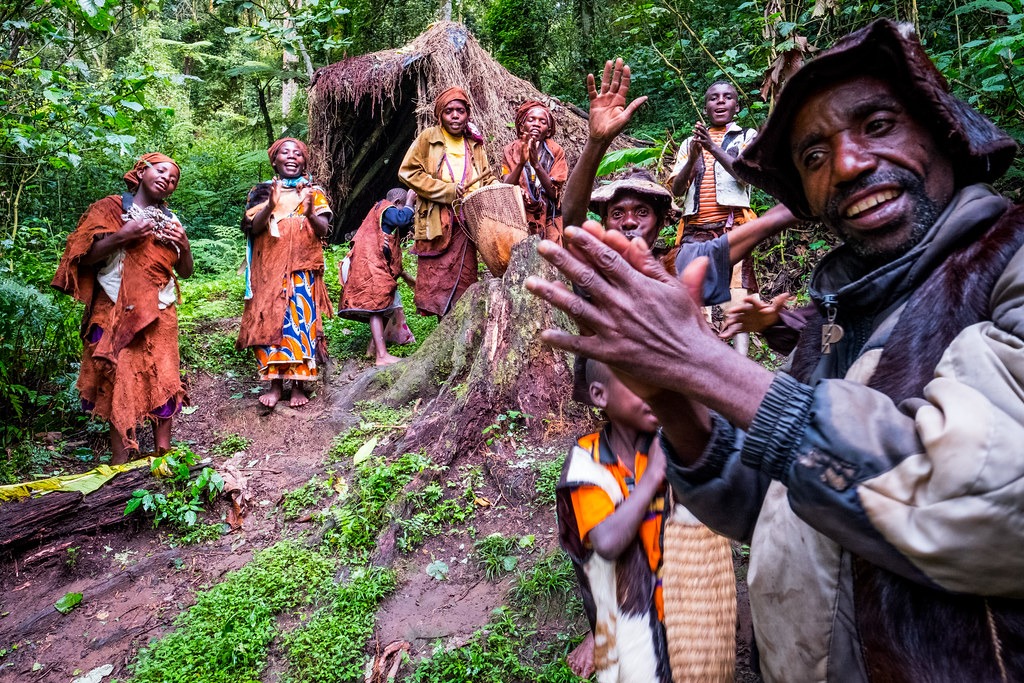
The Batwa are thought to be one of the earliest groups that are thought to have settled in Uganda. They are a people of short stature who are well known for trying to stick to their ancient way of life of being hunter-gatherers. They are forest-dwelling people who used to live in the Ituri Forest in the Democratic Republic of the Congo, but later they migrated to the Bwindi Impenetrable Forest and the forest around the Mgahinga Mountains in Uganda. Some groups of them moved further to the Echuya Forest Reserve in search of better food and shelter.
They were pushed out of the forest when the government officially made Bwindi and Mgahinga national parks to support the conservation of mountain gorillas. After being expelled from the rainforest and resettled elsewhere, they were forced to live with other tribes that saw them as primitive, and this led to their marginalization. Despite the efforts of the government and international organizations to raise their standard of living and make their resettlement more successful, they still stick to their traditional way of life, and their quality of life is way below that of the average Ugandan as they have failed to compete in the modern world.
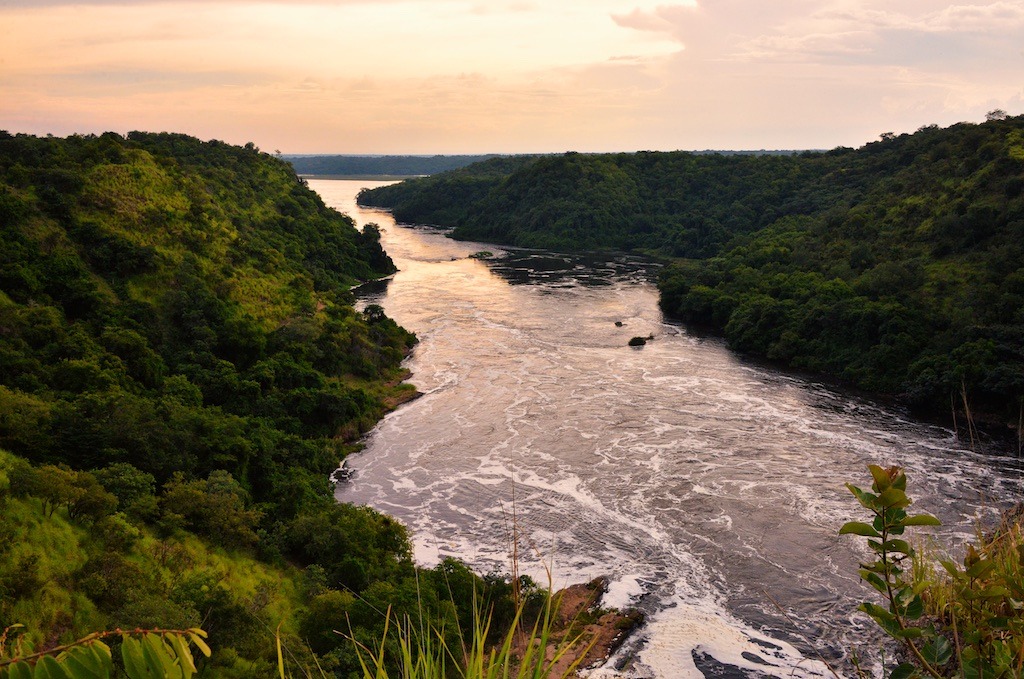
Everyone knows that the Nile flows through Egypt, but did you know the source of the Nile is in Uganda?
In the southeastern part of Uganda, there is a town called Jinja that is about 190 km from the capital city of Kampala. This is where the River Nile starts from Lake Victoria. With its raging rapids, perfect for whitewater rafting, and still waters that are ideal for a leisurely safari cruise, the source of the Nile has captured the attention of the world since John Hanning Speke first saw it in the 1800s.
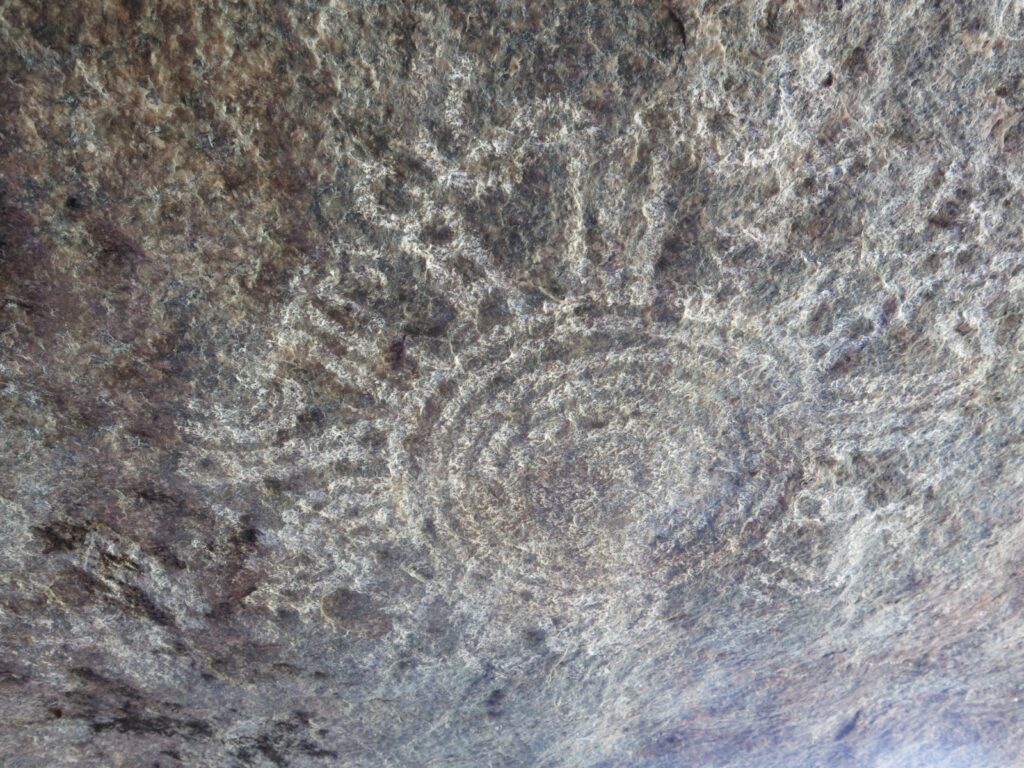
Located in eastern Uganda in Kumi District, about 250 km from Kampala, these rock paintings are thought to have been made over 1 million years ago. They were first documented in 1913 by researchers in the Teso Report, who called them geometric.
These paintings are believed to be similar to the ones in the rock caves in eastern, central, and southern Africa. These paintings are attributed to the Batwa people, the pygmies of the forests of east and central Africa. The Batwa are thought to have lived in larger groups and stayed in big caves where they made the art that is now a tourist attraction before they were pushed out by the migration of the Luo, Nilotics, and Bantu to the area. These paintings shed light on the Iteso people of eastern Uganda and the general cultures of Uganda and Africa as a whole.
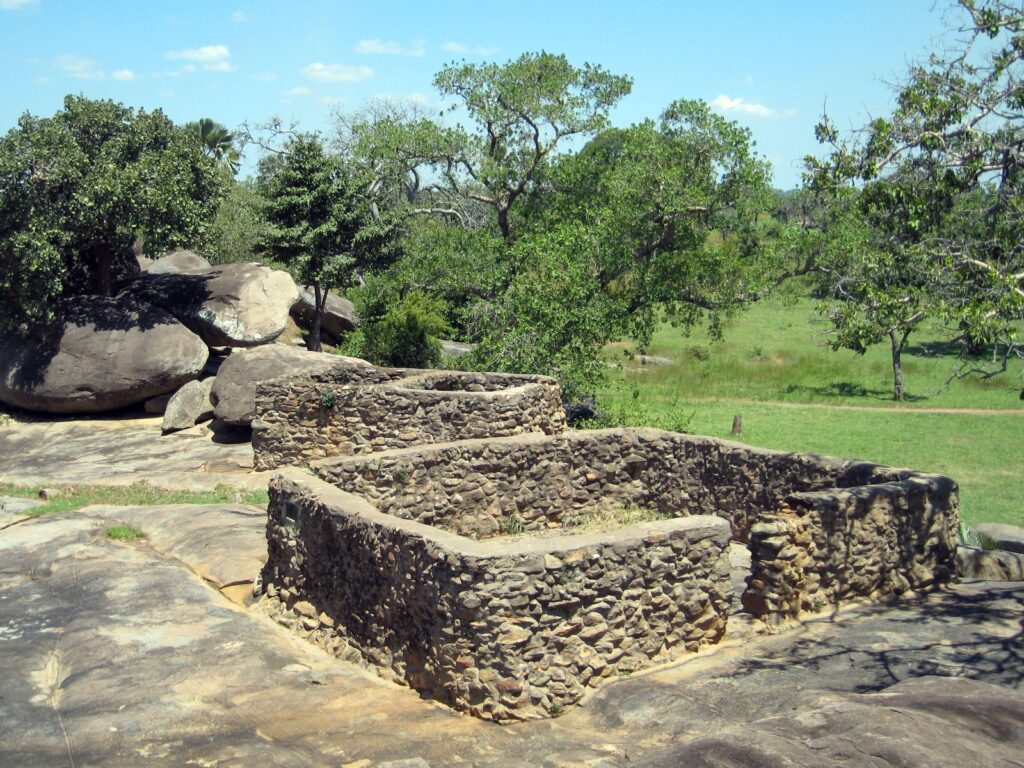
Fort Patiko was built by Sir Samuel Baker in 1872 as a military fort as part of the efforts to stop the slave trade in the Eqoutorial province by the Arabs. As the Arabs had set up huts at Ocecu Hill, modern-day Gulu, where they stored their merchandise, including slaves, this fort was a way for them to intercept this trade.
It functioned as such under Sir Samuel Baker from 1872 to 1876. The fort was later occupied and expanded by Colonel Charles Gordon and Emin Pasha in 1879, where they served as governors of the Province of Uganda under the British.
The fort has since collapsed but it remains a tourist attraction in Patiko Sub County, Gulu.
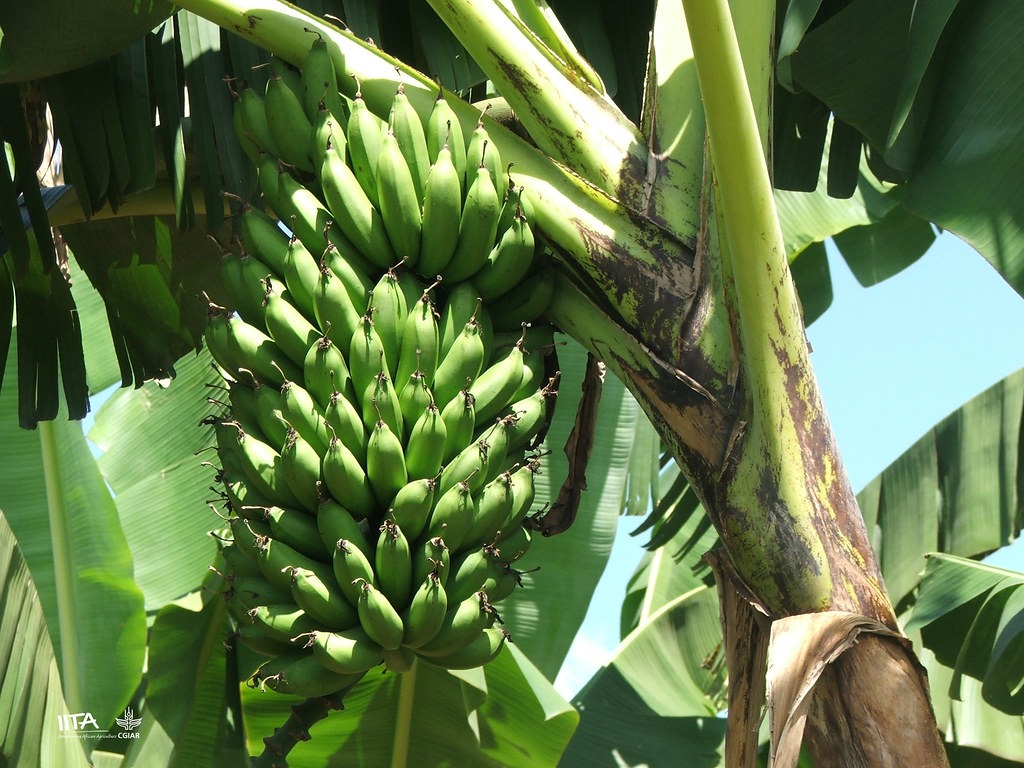
Traditionally a staple food of the Baganda, this type of starchy green banana is now a staple food in the western and central regions of the country but is considered a staple food of the country due to its popularity.
Traditionally the matooke fingers are peeled, wrapped in banana leaves and cooked for a few hours and are after served mashed or as matooke fingers as the main dish or in katogo with groundnut sauce, beans, beef or another sauce. However matooke is also fried in with tomatoes, onions and other vegetables like carrots for a difference in taste.
Matooke is not the only kind of banana in Uganda, there is also gonja also known as plantain that can be either friend, grilled over a charcoal stove or boiled and can be found being sold along the road on long haul trips upcountry. Small sweet bananas, the lady finger bananas locally known as “Sukali ndizi” or “Menvu” and Lakatan bananas locally known as “Bogoya” are some of the other banana varieties in the country.
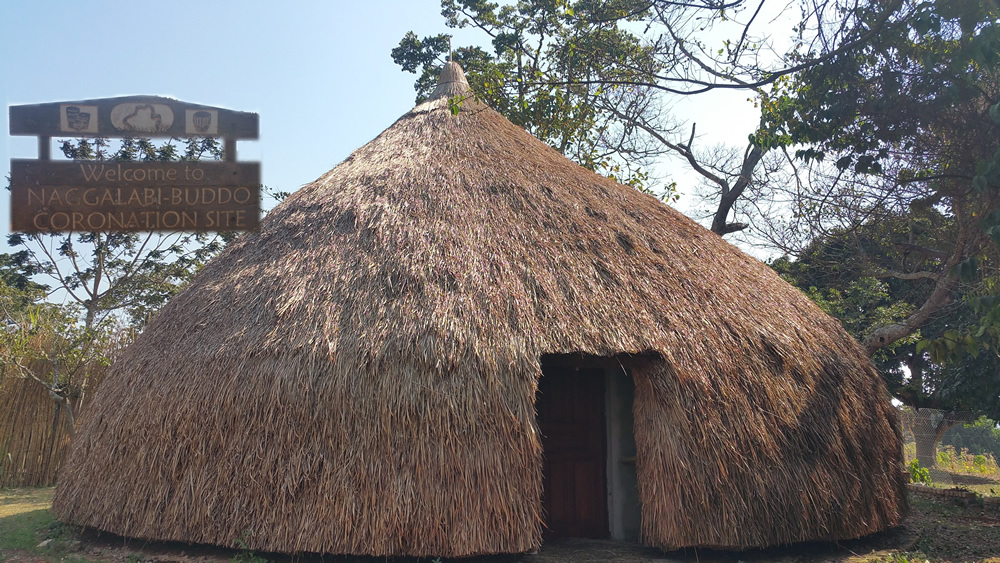
Naggalabi Buddo is the coronation site of Buganda. It is believed that the Buganda kingdom started at this site and from here spread out. Between the 14th and 15th century Buganda kingdom started here and since then every single Kabaka has been crowned from here for the past 800 years.
The rituals performed here during the coronation are necessary because they emulate the very first coronation of a Kabaka at this sight. This site became the official coronation site of the Baganda around the 14th century, due to a fight between two princes Kintu and Bemba for the crown on the hilltop where Naggalabi Buddo stands. Kintu is the one who declared that every kabaka after him would be crowned on the spot where he killed his brother and buried his head under an anthill.
This site is located at Naggalabi in Busiro along Kampala – Masaka highway, about 30 mins to an hour drive away from Kampala.
Uganda is a country overflowing with intriguing sites and sights, each with its own history or story to explain it. The chances for you to learn about the country, its history, and it’s amazing nature are endless and are not to be overlooked, so the next time you are coming with an itinerary for your trip to Uganda, be sure to speak to our safari experts and have them include these fascinating attractions.
Kahumuzah Blessing Agnetta

Unauthorized copying or use of content from this website is prohibited and may result in legal action.
WhatsApp us