What is a mountain gorilla?
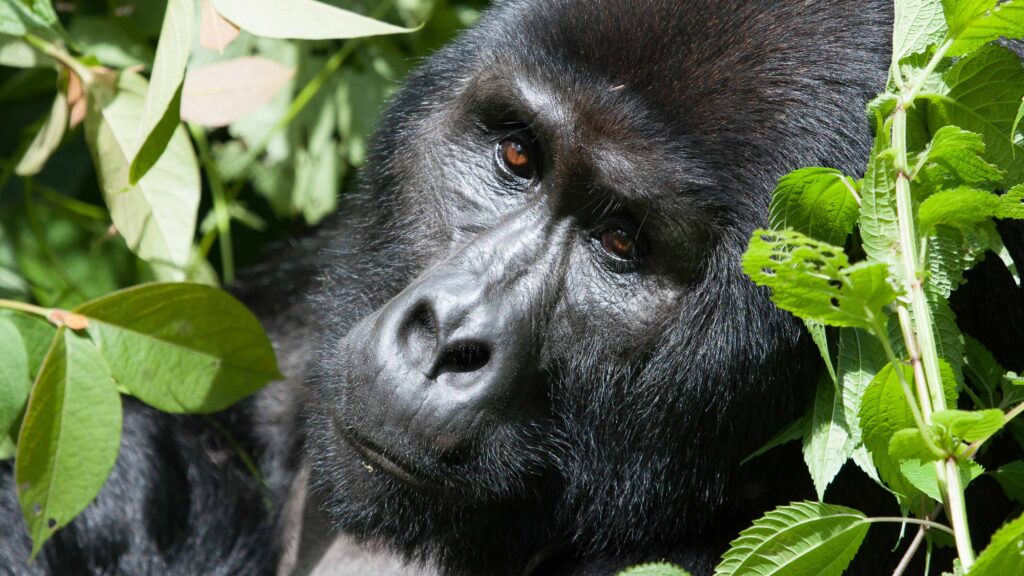
The mountain gorilla is one of the largest primates on earth and is a subspecies of the eastern gorilla species.
What is a mountain gorilla’s scientific name?
Mountain gorillas are also known by their scientific name, Gorilla beringei beringei. The word gorilla comes from a written description by a Carthaginian navigator named Hanno of his expedition about 2,500 years ago around the western coast of Africa. The word beringei is in honor of a German army officer, Captain Robert von Beringe. He found out that there were other gorilla species than the Western Lowland gorilla in 1902 while exploring the Virunga Mountains.
How did mountain gorillas get so popular?
These animals have captured our attention with their remarkable strength, intricate social systems, and uncanny likeness to humans. These magnificent animals offer us a window into our evolutionary history and an insight into the secrets of nature. Mountain gorillas have captured the fascination of the world since the 1960s and 1980s, when Dian Fossey brought attention to them.
What is so special about mountain gorillas?
They live in the mountains, unlike the other species of gorillas. This is possible due to their long, thick black fur, which keeps them warm at high altitudes. This long, thick, black fur is what sets them apart from other apes.
What types of gorillas are there?
There are two main species of gorillas: the eastern and western gorillas.
The western gorilla has two sub-groups:
- The Cross River Gorilla
- The Western Lowland Gorilla.
The western gorilla subspecies can be found in a vast area stretching from Nigeria into the Congo Basin and Angola.
The eastern gorilla has two sub-groups as well:
- The Mountain Gorilla
- The Grauer’s gorilla.
The eastern gorilla subspecies can be found in East Africa, but Grauer’s gorilla in particular can only be found in the eastern part of the Democratic Republic of the Congo.
Where do mountain gorillas live?
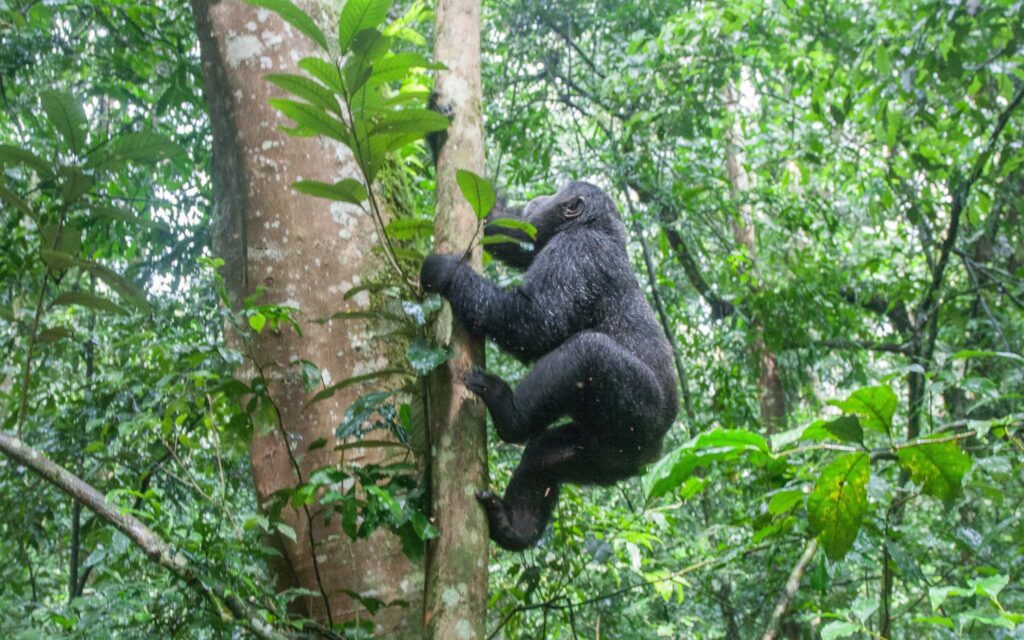
Mountain gorillas live in the rainforests of East Africa. They live at altitudes of between 7000 and 14000 feet. Due to this they have long, thick fur that keeps them warm at the altitudes they live at. They live in two isolated groups, 24 kilometers apart. Over half of the population can be found in the dense forests of the Virunga Mountains, a dormant volcanic range that stretches across the borders of Uganda, Rwanda, and the Democratic Republic of the Congo. The other group lives in Bwindi Impenetrable Forest, which stretches across southern Uganda and parts of the Democratic Republic of the Congo.
What predators do mountain gorillas have?
The only natural predators that mountain gorillas have are leopards. However human beings pose the biggest threat to them and their natural habitats.
How many mountain gorillas are there in the world?
There are about 1004 individuals in the world today, all of which live in East Africa. They live in an area that stretches across the Democratic Republic of the Congo, Uganda, and Rwanda.
How do mountain gorillas live?
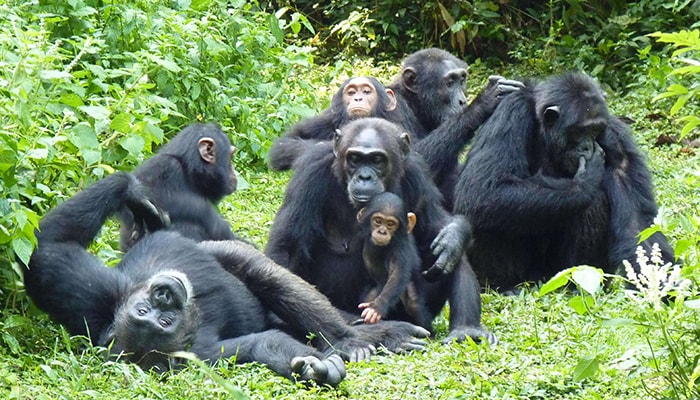
Gorillas live in family groups known as troops. These troops are led by a silverback, a dominant adult male. The groups usually have between 5 and 10 individuals, but some can have up to 50 individuals. The Silverback is responsible for ensuring the group finds good foraging grounds and safe places to sleep, settles group conflicts, and protects the group. Each family group and individual is unique and complex, with strong familial bonds that hold their societies together.
What do mountain gorillas eat?
Mountain gorillas are herbivores and this means that they eat only plants. Around 85% of their diet is made up of leaves, shoots, and stems, but gorillas can also eat larvae, snails, ants, and even roots, barks, and rotting wood which is a good source of sodium/salt (“Top 10 facts about mountain gorillas | WWF”, n.d.).
How much do mountain gorillas weigh? How tall are mountain gorillas?
Male mountain gorillas weigh about 400 pounds and stand at about six feet. Female gorillas are smaller and weigh about 200 pounds and stand at about five feet.
How much of our DNA do we share with gorillas?
They may look very different from humans, but mountain gorillas share 98.3% of their genetic code with humans. This makes them one of our closest genetic matches after chimpanzees and bonobos.
How many times a year do gorillas give birth?
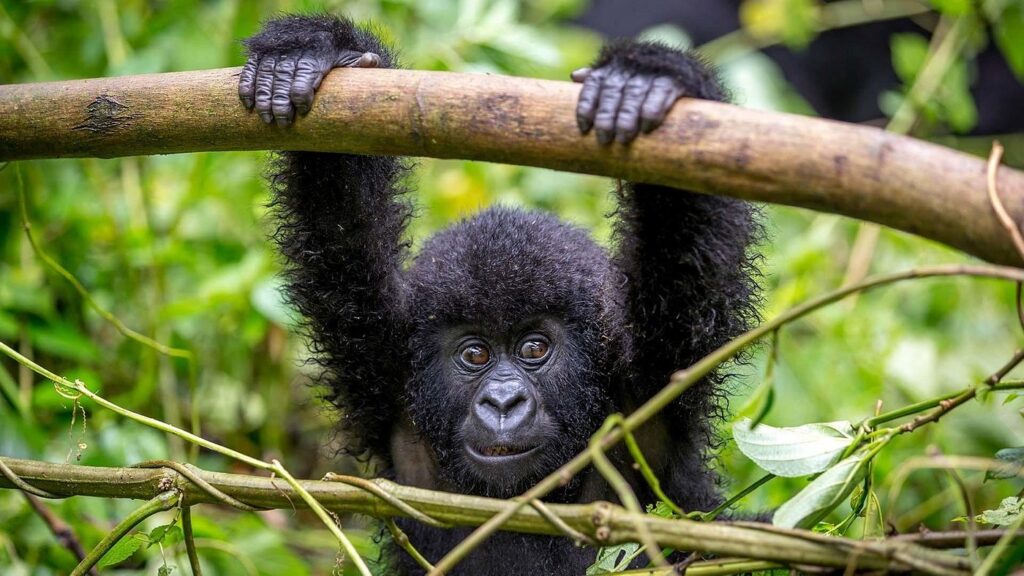
Gorillas have no fixed breeding season, and births happen throughout the year. They usually give birth to a single infant but occasionally have twins. However, they give birth only once every four years and have a gestation period of about eight and a half months. Newborns weigh about 4.4 pounds and are helpless and completely dependent on their mothers for their first three months. The female gorillas have a menstrual cycle of 28 days with about 3 days of fertility.
What is a mountain gorilla’s life cycle?
They go through an accelerated version of the life stages of humans. They are helpless for their first three months, then transition into childhood for the next five months. Their juvenile stage lasts between three and six years, then they transition into the adolescent stage that lasts between six and eight years. The early adult and mature adult stages vary between males and females. Male gorillas reach sexual maturity between the ages of 11 and 13 but they are only able to successfully breed at the age of 15 when they reach maturity. Females, on the other hand, start ovulating at eight years old and have their first child between the ages of 10 and 12.